Voice Changer Legality: Laws, Limitations, and Ethical Use in 2026


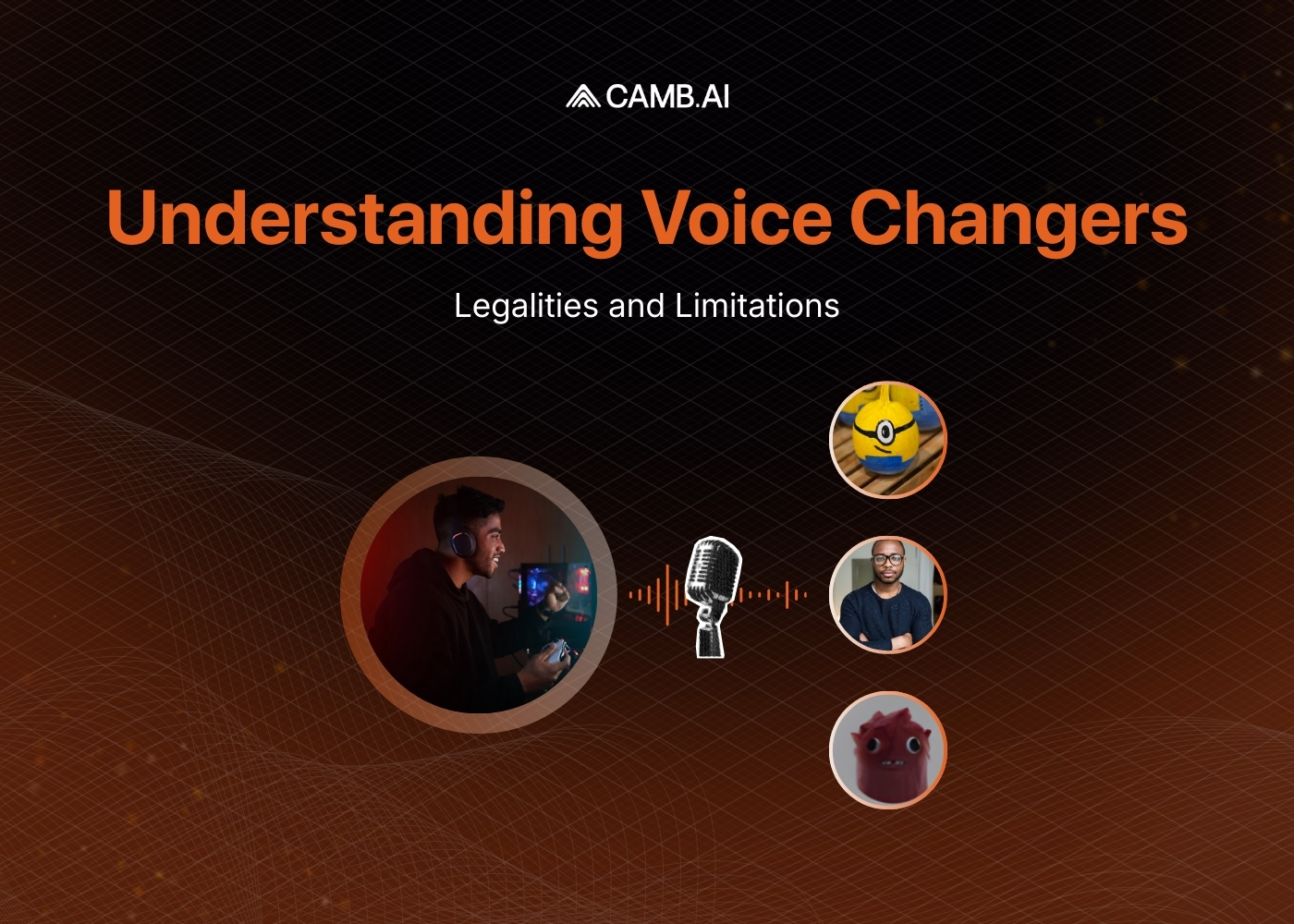
Voice changers are legal to own and use in most countries. The technology itself is not the issue. How you use it determines whether you stay within the law.
A content creator adding effects to a podcast episode faces zero legal risk. Someone cloning a celebrity's voice to sell a product without permission faces fraud and impersonation charges. The difference is consent, intent, and context.
With AI voice cloning now capable of replicating a speaker's identity from a few seconds of audio, the line between creative tool and legal liability has gotten thinner. Knowing where that line sits matters for anyone working with voice modification technology in 2026.
Are Voice Changers Legal?
Yes, in nearly every jurisdiction. Voice changers have legitimate applications across entertainment, gaming, content creation, education, and privacy protection. Free and paid voice changer apps are widely available on every platform, and owning or using one carries no legal restriction on its own.
The legal risk begins when the tool is used in ways that violate existing laws around identity, consent, or intellectual property.
Where Legal Problems Start
Using a voice changer to impersonate someone without consent, especially for commercial or fraudulent purposes, can trigger laws related to identity theft, fraud, and harassment. Several categories of misuse carry real legal consequences:
- Impersonating another person without their knowledge or permission
- Cloning a distinctive voice to create unauthorized commercial content
- Using altered voices to harass, stalk, or intimidate individuals
- Recording or modifying someone's voice without complying with privacy laws
Publicity rights laws in the United States and similar regulations in other countries protect a person's voice as part of their identity. Violating those rights can result in civil lawsuits, criminal charges, and financial penalties.
Voice Changer Restrictions for AI Voice Cloning
AI voice cloning raises the stakes because the output sounds nearly identical to the original speaker. Traditional voice changers apply effects. AI voice cloning replicates identity.
When you clone a voice, you create a synthetic version of a real person's vocal identity. That means the same laws governing likeness, publicity rights, and biometric data apply. A cloned voice used without consent in an advertisement, social media post, or product demo can violate intellectual property laws even if the words spoken were never said by the original person.
Platform policies add another layer. YouTube, TikTok, Meta, and most ad networks now require disclosure of synthetic or AI-altered media. Violations can result in content removal, demonetization, or account suspension.
Ethical Considerations Beyond Voice Changer Legality
Legal compliance is the floor. Ethical use goes further.
Consent Is Non-Negotiable
Anyone using AI to replicate another person's voice needs explicit, documented permission. A verbal agreement or a general terms-of-service checkbox does not meet the bar for commercial voice cloning. Proper consent includes what the voice will be used for, which channels and languages it will appear in, how long the permission lasts, and whether the person can revoke it.
Cultural Sensitivity and Transparency
Mimicking accents or speech patterns without context can reinforce stereotypes. Using a cloned voice to create content in languages the original speaker does not speak requires careful handling to avoid misrepresentation.
Audiences respond better when they know AI is involved. Disclosing the use of voice modification or AI-generated speech builds trust and avoids the credibility damage that comes from being caught using synthetic audio without acknowledgment.
Consequences of Misusing Voice Changers
Misuse carries penalties across multiple dimensions:
- Criminal charges for fraud, impersonation, or identity theft
- Civil lawsuits for unauthorized use of a person's likeness or voice
- Platform bans and content removal on social media and ad networks
- Reputational damage that affects personal and professional relationships
- Loss of audience trust when undisclosed synthetic content is revealed
A single case of unauthorized voice cloning used in a public campaign can generate legal fees, settlement costs, and brand damage that far exceeds the cost of doing things properly from the start.
How to Use Voice Changers Responsibly
Responsible use comes down to four practices.
Know Your Local Laws
Regulations around voice modification, biometric data, and AI-generated content vary by jurisdiction. The EU's AI Act, state-level publicity rights laws in the US, and platform-specific rules all apply differently depending on where you operate and where your audience lives. Research the rules that apply to your specific use case before publishing.
Get Written Consent for Any Real Voice
Cloning a colleague's voice for an internal training video still requires written permission. Consent should specify the exact use case, distribution channels, duration, and whether the voice can be modified or translated into other languages.
Use Legitimate AI Voice Tools
Professional AI voice platforms build consent management, usage tracking, and ethical guardrails into their workflows. CAMB.AI's Voice Library lets teams clone voices with a short audio reference, save them for reuse across projects, and manage permissions within a centralized system. Every voice profile can be applied across dubbing, text-to-speech, and audiobook production in 150+ languages while maintaining speaker identity through MARS-Pro, which achieves 0.87 WavLM speaker similarity on the MAMBA benchmark.
Disclose AI Use Where Appropriate
Label AI-generated voice content in customer-facing materials, advertisements, and any context where the audience could reasonably mistake synthetic speech for a live human recording. A simple disclosure line is enough.
Voice changers and AI voice cloning are powerful tools for content creators, media teams, and enterprises operating across languages. The technology is not the risk. Skipping consent, ignoring platform rules, or hiding the use of synthetic audio is.
Whether you're a media professional or voice AI product developer, this newsletter is your go-to guide to everything in speech and localization tech.
Frequently Asked Questions
Related Articles